What kind of childhood did you have growing up with your family? Chances are that if you had at least one brother or sister you had your fair share of squabbles as a child. Hopefully those will go away as you became an adult. There is a lot of ground covered in these three chapters of Genesis. Genesis 25 starts with Abraham passing away at the ripe old age of 175. The chapter gives us some background on Abraham’s wives that he took after Sarah died and the children that each bore. Apparently, Ismael comes back and both he and Isaac bury their father, Abraham.
The latter part of Genesis 25 describes the birth of Isaac and Rebekah’s twins, Jacob and Esau. These two boys fight from the very start, even from the womb, “The babies jostled each other within her” v. 22. And as it came time to give birth to them, “After this, his brother came out, with his hand grasping Esau’s heel” v. 26. The boys continue to fight over food and birthrights and ultimately over their father’s blessing when Isaac is about to die. An interesting discussion in these chapters is the revelation to Rebekah that Jacob the younger will be stronger and “the older will serve the younger” v. 23. Are Rebekah’s actions right, to help her son Jacob steal the birthright from Esau? Did she believe she was helping Jacob take his rightful place or were they sinful in deceiving her husband and other son Esau? There is plenty of blame to go on the whole family. Each of the parents showed favoritism toward a child and the children often acted impulsively with each other making careless choices with consequences.
Genesis 26 tells a familiar story but with different characters. We find Isaac moves south to the land ruled by Abimelech because of a famine. Are we shocked at what takes place? Isaac apparently has picked up some bad habits from growing up around his father, namely covering your own rear. Isaac too lies to Abimelech for the same reason as his wife Rebekah. This time Sarah is not his sister, but his cousin. Some critics have suggested that this repeat in Genesis is just an error that occurred in copying the manuscripts over time, but a careful read of the texts shows nothing like this. The accounts are far different to be just a simple copyist error.
Psalm 23 is probably the most well-known chapters in the Bible. This psalm of David is beloved and memorized by so many. I would encourage you to slow down and read it carefully. You may know it and can quote it for memory, but take the time to meditate on each phrase and what it means. Shepherding was the most common occupation of the Israelites, and they would have easily identified with the theme. One thing I would point out to you is the personal nature of this psalm. The Lord is “my” shepherd, he makes “me” lie down, for you are with “me.” Often the slant against the Old Testament is that character of God is not very personal in nature. This just comes from a incomplete few of Scripture. Psalm 23 shows us that God is our shepherd.
What else do you see in these chapters? What words, phrases, themes do you see? What words repeat and bring attention to you? Add your thoughts below.
What’s the longest you have ever waited for something? Maybe as a kid you counted down the days until summer or graduation. Maybe you waited for a upcoming family vacation or time to retire from a job. There is no good way around it, waiting can be tough. Here in Genesis 21 we finally have the birth of Isaac that was promised 25 years ago. “Now the Lord was gracious to Sarah as he had said, and the Lord did for Sarah what he had promised” v. 1. God keeps his promises and was gracious to Sarah. “Sarah said, ‘God has brought me laughter, and everyone who hears about this will laugh with me’” v. 6. Laughter from before from Sarah was steeped in disbelief, now Sarah’s laughter was full of joy. The name Isaac means “he laughs.”
The later part of Genesis 21 can seem rather to harsh. Sarah wishes to send Hagar and Ismael away and then God confirms it to Abraham. We might question, “What kind of God would do this to people like Hagar and her son?” God’s response, “Do not be so distressed about the boy and your maidservant. Listen to whatever Sarah tells you, because it is through Isaac that your offspring will be reckoned” v. 12. Abraham did not know the fate of his son Ismael, but God did. We only have to read a few verses more to see how God would take care of Hagar and Ismael too. God provided water and the ability for Hagar and Ismael to become part of a family. The pain of sending a person away might seem harsh, but if it has a greater good of protecting the promise to Abraham through Isaac then it was the right thing to do.
In Psalm 21 we have another psalm of David. He rejoices in God’s strength and protection over him. David recognized that God had delivered him from his enemies. God’s plan had come to pass. The last verses are a theme of judgment for David’s enemies. “Your hand will lay hold on all your enemies; your right hand will seize your foes. 9 At the time of your appearing you will make them like a fiery furnace” vv. 8-9. Fire, is a image of judgment often in the Bible. Fire refines and purifies things that pass through it or it will burn up the things that are not of value or that will last.
John 21 is the last chapter of the Gospel of John. Like many final chapters in a book, John 21 offers some much needed resolution, especially to Peter. In John 18, you remember Peter denies Jesus three times in Jesus’ trails. Jesus told Peter he would do it. Three times Jesus asks, “Simon son of John, do you truly love me more than these?” v. 15. Peter’s feelings are hurt because Jesus seems to repeat the question over. Many have pointed out that there is forgiveness for each denial that Peter spoke of earlier.
The four Gospels are book-ended at the beginning of Matthew and the end of John with a similar scene. John 21 opens with the disciples returning to shore after being out all-night fishing. They had caught nothing the Scripture says, “So they went out and got into the boat, but that night they caught nothing. 4 Early in the morning, Jesus stood on the shore, but the disciples did not realize that it was Jesus” vv. 3-4. Keep in mind that the disciples had not recognized Jesus yet. Now go to Matthew 4 and you will find the narrative of Jesus calling the first disciples, specifically Peter and Andrew. This is where they meet Jesus for the first time, and it was while they had attempted to cast their nets for fish. Both times, Jesus does the miraculous and helps them bring in the biggest haul of fish. This is when they realized who Jesus was when he told them again where to cast their nets and catch fish. How has Jesus returned to you again and again and shown himself faithful and forgiving? Is there anything in your life you need to confront the Savior about?
What else do you see in these chapters? What words, phrases, or themes stand out to you? Write your thoughts below.
In Genesis 20 we again find Abraham in a similar situation to before. Last time Abram lied to the king of Egypt, and now he finds himself Lying to Abimelech another leader from the Negev. There are several lessons we could learn from this passage. First, we are not always guaranteed to get it right the first time, or the second time! Looking out for himself, he goes back to the sister/wife story to save his own skin. He should have known this would not have ended well for his wife. Second, Abraham assumes, “There is surely no fear of God in this place, and they will kill me because of my wife” v. 11. Have we not heard that assumption is the lowest form of knowledge. Many times, we make assumptions about others and are wrong. Many times, others make assumptions about us and are equally wrong. Once again, God steps in and saves the day by appearing to Abimelech and inflicting some type of “barrenness” on all the women in his area.
In Psalm 20 we read a short psalm of David where he praises God for saving Him and protecting him. Verse 4 can be a misleading verse if we read it as if God gives us a blank check. “May he give you the desire of your heart and make all your plans succeed.” We must remember that we must align our hearts and our will to the Lord’s first. We must seek to live according to his laws. Even then, we are not guaranteed that we will get what we want. Often God knows better, and His plans are greater than our own. Verses 6-7 remind me of Genesis 20 and the situation with Abraham and Abimelech. “Now I know that the LORD saves his anointed; he answers him from his holy heaven with the saving power of his right hand. 7 Some trust in chariots and some in horses, but we trust in the name of the LORD our God.” Even though Abraham messed up again, God came to his rescue, because God had plans for him and protected those plans of the man, He had anointed to be the father of the Jewish nation. People place a lot of trust in things today, the government, organizations, businesses, individual people like friends and families. They may let us down from time to time, but God never will.
In John 20 we have the account of the empty tomb. The empty tomb is the evidence that we can trust God. Mary is the first to visit the tomb on the third day. She finds it open, and the body of her Lord is gone. She runs to tell Peter and John who race to the tomb to see for themselves. The fact that women were the first to see the resurrected Jesus and give testimony to it is a fact that tells us that the gospels were not made up. If they were, it was a very weak testimony that gave women the first claim to see.
While Mary is in shock and filled with questions Jesus tries to have a conversation with her and she doesn’t recognize that Jesus is the one talking to her. Not until he calls her by name, “Jesus said to her, ‘Mary.’ She turned towards him and cried out in Aramaic, ‘Rabboni!’ (which means Teacher)” v. 36. In all the time that Mary spent with Jesus before his death, Jesus may have conversed with her and called her by name many times. Now doing the same again made the connection for her. Only in our relationship with God will we learn to distinguish the voice of God when He speaks into our lives. How important is it to develop and maintain our walk with the Lord so that when He speaks to us, we like sheep will recognize the great shepherd’s voice.
In the last part of John 20 we find the conversation between Jesus and Thomas. He had missed the first meeting with the disciples and would not believe unless he saw Jesus for himself. Jesus was pleased to offer him the evidence he needed to see. Jesus offered his wounds to touch and see for himself. If we are searching for truth, the best thing we can do is to keep looking for it. When we face doubt, the worst thing we can do is nothing. If we stand still and refuse to look for answers our doubt will grow. If you are facing doubt, keep searching and seeking the Lord and He will supply the evidence that you need to believe.
What else to you see in these chapters? What words, phrases, or themes stand out to you? Add your thoughts below.
Genesis 19 is the story of the destruction of Sodom and Gomorrah. As soon as Lot finds the two angels entering the city in the evening, he pleads with them to stay with him and not in the middle of the city. He likely knows how wicked “all the men from every part of the city” v. 4 were. Lot still an outsider to the people of Sodom tries to offer hospitality, and ultimately protection for the two guests. How do we as Christians look out for people today? How can we offer protection or safety to others in a time of need?
The reason for the destruction of the city has been well known for thousands of years. We even have Jewish commentary that speaks about the nature of the homosexuality in this chapter. Some Revisionists and LGBTQ affirming people will try to say that “knowing” the two angels was not about having sex with them, but this doesn’t fit the context. Especially when Lot offers his daughters to the men who “who have not known any other man.” The same Hebrew word is used. It clearly could not be to know the men in a non-sexual way because Lot’s daughters were “pledged to marry.”
But what are we to make of Lot’s proposal? “Look, I have two daughters who have never slept with a man. Let me bring them out to you, and you can do what you like with them. But don’t do anything to these men, for they have come under the protection of my roof” v. 8. Here are some opinions or interpretations. One, he simply did not care about his own daughter’s safety and lives. Two, he was scared and quickly offered a solution in desperation. Three, he was faced with a moral dilemma and choose the lesser of two evils. Four, Lot’s comments should be taken as sarcastic in a way to shock their conscience and stop their actions. We must remember that Lot does not have the integrity that Abraham has, and His actions are compared to Abraham’s in a number of ways. God did not command Lot to offer his daughters, nor would he. The Bible describes his free will choice and is not a prescription for us to follow in the future.
Psalm 19 is a psalm that highlights the glory of God seen in nature and how it points to a creator. “The heavens declare the glory of God; the skies proclaim the work of his hands. 2 Day after day they pour forth speech; night after night they display knowledge” vv. 1-2. In apologetics this is referred to as general revelation. God reveals himself through creation to every single person on the planet. David then goes on to praise God for his Word, He uses the different words like “the Law of the Lord,” “statues,” “precepts,” and “commands.” David sees the benefits of God’s special revelation to us through his Word. David ends the psalm with a prayer, and he asks God to keep him from sinning. “May the words of my mouth and the meditation of my heart be pleasing in your sight, O LORD, my Rock and my Redeemer” v. 14.
John 19 is the narrative of Jesus crucifixion. I would encourage you to take your time and read through the chapter slowly. Sometimes we think we know things and, in our haste, we may miss the important details. I have heard many Christians debate whether or not they believe Jesus was crucified with no clothes on or very little. Most likely, he had none. This was all a part of the cruelty of the cross. Not only was it a painful way to suffer and die, (The word excruciating comes from the practice of crucifixion), but it was also the public humiliation that Jesus faced from those who passed by. Verses 23-24 describe that the soldiers divided his clothes between them and gambled for the final under garments that were left. This leads me to believe Jesus was put on display in total humiliation. As you read through the story, keep in mind that Jesus endured all that for you and to die for your sins on the cross.
Earlier we discussed the hospitality of Lot in the city of Sodom. Now in John 19 we see Jesus in the lowest point of his earthly life on the cross, but He does something amazing. Something only the Godman could do. He has the desire to hand his mother over to the disciple most believe as John to take care of her and look after her. “When Jesus saw his mother there, and the disciple whom he loved standing near by, he said to his mother, “Dear woman, here is your son,” 27 and to the disciple, “Here is your mother.” From that time on, this disciple took her into his home” vv. 26-27. Most people turn inward when they face pain or difficult circumstances, but Jesus still cared for others. Despite the ups and downs of life, who can you and I look out for and show compassion or hospitality toward?
What else do you see in these chapters? What words or phrases, or themes stick out to you? Add your comments below.
Genesis 18 opens with the statement, “The LORD appeared to Abraham near the great trees of Mamre while he was sitting at the entrance to his tent in the heat of the day” v. 1. The next verse tells us that three men had come to visit with Abraham. Their identity would slowly be made known as you read the next two chapters. Abraham quickly offers these three a typical biblical show of hospitality. He offers them water and a fresh meal prepared just for them. This will be a stark contrast to the way the 2 angels are treated when they enter the town of Sodom in the next chapter. Abraham entertained these men without really knowing who they were, but he showed them kindness. We may not find ourselves entertaining angels, but entertaining people that have a need that we can meet. An act of kindness shown may bless them and it may come back as a blessing to us. The Lord blesses Abraham and Sarah, despite Sarah who “laughed to herself” v. 12 about the prospect of having a child in the next year. Sarah may have long given up on the promise that God made to them, and with 25 years having passed she scoffed at the idea taking place now. Have we forgotten who the Lord is and what kind of miracle working Savior He is?
The Lord reveals to Abraham what he is about to do with Sodom and Gomorrah and the surrounding cities of the plain. Abraham bargains with him, “What if only 50, 45, 40, 30, 20, and 10 righteous can be found there?” vv. 26-32. Abraham is concerned for his nephew Lot and his family. He doesn’t want the Lord to sweep away the righteous with the wicked. God is a just God and will not punish the righteous for the sake of the wicked.
Psalm 18 is a psalm of David where he celebrates the Lord’s hand in delivering him from King Saul and the enemies he faced on the run. “He rescued me from my powerful enemy, from my foes, who were too strong for me” v. 17. David recognized it wasn’t his own wit or strength that gave him the victory, it was the Lord. David also states that it wasn’t because of who David was that God provided the rescue, it was his righteous acts that gave him the help from God. “The Lord has dealt with me according to my righteousness; according to the cleanness of my hands he has rewarded me” v. 20. Too many times Christians can fall in the trap of thinking these same two thing. It was our own wisdom or strength that secured our victory. Many Christians think they can do no wrong because they are “Christians” and they stop focusing on their righteous living like they once did.
In John 18 we read of Jesus trail before the Jewish Sanhedrin and before Pilate. The trials and questioning is not about anything Jesus did. His miracles, he healed, preformed demon exorcisms, or his teaching. His trail was grounded on who Jesus claimed to be. He had given hints all through the Gospels and made people wonder if He indeed was the Christ. Now the religious leaders demanded an answer. Powerless to execute capital punishment, the Jews are forced to take Jesus to Pilate for the results they want. Pilate asked him, “Are you the king of the Jews?” v. 33. Jesus admits it so and Pilate finds no reason to charge him with a crime and desires to let Him go, but the Jews insist that he not. Who do you say that Jesus is to you? Some call Him a teacher, a prophet, a wise sage, but Jesus tells us in the Word that He is much more. Jesus is the promised Messiah, and Savior of the World.
What else do you see in these three chapters? What words, phrases, or themes stick out to you? Write you thoughts below.
In Genesis 13 we find a choice of right or left. The Scripture says that Abram had become very wealthy. His herdsmen and Lot’s herdsmen started to argue, likely over who was occupying which pastureland for their own livestock. Being the eldest, Lot had the right to select which area he wanted but in a show of kindness allows his nephew Lot to pick first. Lot looked around and the Scripture says, “Lot looked up and saw that the whole plain of the Jordan was well watered, like the garden of the LORD” v. 10. This must have allured his eye to choose this side over the other. The Scripture hints at what will come in the next chapter by mentioning Sodom and that “the men of Sodom were wicked and were sinning greatly against the LORD” v. 13. Is this not the perfect illustration of sin. It looks appealing to the eye at first, at a distance, all seems fine, but sooner or later we find ourselves in a place and situation we did not foresee with consequences we did not want to face.
Psalm 13 is a smaller psalm of David. If this psalm seems familiar, it is because David again is crying out to the Lord as he wrestles with his thoughts and wonders, “How long, O Lord? Will you forget me for ever? How long will you hide your face from me?” v. 1. As David writes this psalm out it appears that God has not resolved his situation yet, but David leans on the promises of God. He writes, “But I will trust in your unfailing love; my heart rejoices in your salvation” v. 5. David took comfort knowing that God would save him, even if he didn’t know how. Where do you think David had gotten a trust like this? Chances are it was not automatic, it was build by many times in his past when God rescued him. We can do the same when we look back and see how the Lord has brought us through in times past.
John 13 might be the most challenging image of Jesus that followers of Christ look at. Jesus is God, He is Savior and LORD, miracle worker, teacher, but here hours before Jesus would go to the cross and pay the debt of the world’s sins, Jesus humbles himself and serves his disciples by washing their feet. Jesus had already humbled himself as Paul describes in Philippians 2:4-11, but this act of foot washing was something that would leave a mark on his disciples. The chapter begins with his intention, “he now showed them the full extent of his love” v. 1. So many people are caught up in being served today. America has become a nation of service. How many carwashes have popped up over the last few years or businesses that will do anything you want them to… for a price. The meal delivery business like Uber Eats, Door Dash, and Grub Hub show us we are willing to pay anyone just about anything to be served. Jesus was a leader who was willing to serve those he loved. If you pull comments from the disciples early in Jesus’ ministry its clear they think He was going to come in and rule as Messiah. The Jews were looking for someone to free them from the Romans and they would return to their glory days. When Jesus washed their feet he set an example for them to follow. “You should do as I have done for you” v. 15. This message of Jesus was taken to heart by the early Christians, it’s all in the writings of Paul and the other Epistles. How do you follow Jesus’ example and serve others around you? What can you do to show the love of Christ to others in your circle of influence?
What words, phrases, or themes do you see in these chapters? What other things stand out to you? Add your thoughts below.
Every day that we live we can do one of two things. We can point people toward God with our words and actions or we can point people to ourselves and other people. It’s either the creator or the creation. The story of the tower of Babel in Genesis 11 is an example of the latter. Men got together and decided that they wanted “make a name” v. 4 for themselves by building a tower that “reaches to the heavens” v. 4. The question may cross your mind? Why would God scatter and divide people? Doesn’t God want peace and unity in the human race? I think the answer lies in the actions God took. By staying together in a large city, it would be a protective measure for all that lived there. God wanted his creation to reach out to Him in times of need and to call on Him to provide for us. Another important part of this is the command that God gave men to “fill the earth” (1:28, 9:1,7) both before and after the flood. How can you live today and make God known? John the Baptist has great advice for all of us; “He must become greater; I must become less” (John 3:30).
The rest of Genesis 11 gives the godly genealogy of Shem. As you can see from the ages of his descendants, there is a gradual decline in the life span of the sons. The final verses of Genesis 11 lead us up to the next chapter about Abram. It has been said by some scholars that more time may have passed in Genesis 1-11 than has passed from Genesis 12 – Revelation 22 even to the present day.
We can see a similar theme in Psalm 11. David exclaims “In the Lord I take refuge. How then can you say to me: Flee like a bird to your mountain” v. 1. David would rather be in the presence of the Lord in the temple than away from Him. David became short-sighted and forgot that there is no place that God cannot be. In one of the later psalms David would write; “Where can I go from your Spirit? Where can I flee from your presence? 8 If I go up to the heavens, you are there; if I make my bed in the depths, you are there” (Psalm 139:7-8). God is always present with His people. David is confident and knows that “For the LORD is righteous, he loves justice; upright men will see his face” v. 7.
The narrative of Jesus raising Lazarus from the dead in John 11 is one the greatest miracles we have recorded in the Gospels. Again, much like Jesus’ statement a couple of chapters earlier Jesus proclaims that “This sickness will not end in death. No, it is for God’s glory so that God’s Son may be glorified through it” v. 4. Jesus was ready to point people to the works of God, through Himself as God. The disciples remind Jesus of the danger they faced in Judea. The slow and dimwitted disciples do not yet understand what Jesus will do, but they are ready with obedience to follow Jesus as Thomas exclaims, “Let us also go, that we may die with him.” v. 16. Let this be a lesson for all of us, we must obey when we know God is leading us, even if we do not understand.
Mary and Martha and the disciples wonder why Jesus would delay and not act sooner. “’Lord,’ Martha said to Jesus, ‘if you had been here, my brother would not have died’” v. 21. Sometimes we have hope and trust in Jesus, we just misunderstand the method or measure of time that God’s chooses to work in our life. Jesus answers her with one of the seven “I am…” sayings in John. “I am the resurrection and the life. He who believes in me will live, even though he dies; 26 and whoever lives and believes in me will never die. Do you believe this?” vv. 25-26. It’s not so much about how Jesus will work, it is more about who He is to do the work of God.
What other words, phrases, or themes do you see in these passages? What are some things you have seen God work in your life in the past that were not answered like you thought they would be? What are some things that you trust in the Lord in life now? Add your thoughts below.
Genesis 7 is the continuation of Noah and the flood. When there are really well-known stories in the Bible that you read, I would urge you to pay very close attention to the details that you read. Many times, the details get changed unintentionally because they are repeated so often by people like the “telephone game” you may have played when you were younger. What things do you see that you may have forgotten or read too quickly. Verses 1-2 explain that Noah was to take seven pairs of clean animals and one pair of unclean animals on the Ark. Verse 9 explains that these animals “came to Noah and entered the Ark.” I’m sure Noah was glad he did not have to go search for them all. Genesis 7:17 says that it rained for 40 days and 40 nights. All throughout the Bible the number forty is often used as a “testing” period in someone’s life. Israel spent 40 years in the wilderness, Jesus fasted for 40 days before he was tempted by the Devil, and Elijah ran for 40 days to Mount Horeb away from Jezebel (1 Kings 19:8). What testing times have you had in your life? How did you weather them? God used the Ark to protect Noah and his family. How will you allow God to protect you during testing times?
Psalm 7 continues this same theme of protection. David calls God his “refuge.” He calls out to God to deliver him from “all those who pursue me” v. 1. David then does an interesting thing; he asks God to examine him. “O Lord my God, if I have done this and there is guilt on my hands – if I have done evil to him who is at peace with me or without cause have robbed my foe – then let my enemy pursue and over take me” vv. 3-5. David is asking for justice from God no matter who is at fault. No doubt this is a rare character trait of many people today. People often only want justice when it benefits them all the while ignoring their own failings. The flood in Genesis 7 was God’s righteous judgment on the world for their wickedness.
John 7 records the time Jesus went to the Feast of Tabernacles. The Feast of Tabernacles or Feast of Booths as it was also called was a time where Israel remembered and celebrated how God provided for them when they left Egypt and went into the desert. They would celebrate it for a week by building “booths” to live it for the week. Jesus had already stirred up some hate from the Jews to the point where they were looking for a way to kill him. Jesus’ own brothers were goading him to go to the Feast of Tabernacles. Why? Not because they wanted his ministry to grow, the Scriptures say “For even his own brothers did not believe in him” v. 5. I’m sure Noah had his nah sayers, but Noah still had his family. Jesus own earthly brothers did not believe in him. Jesus stayed at home and away from Jerusalem.
However, Jesus did delay his going but instead decided to go in secret. He went and began to teach the people. The people are amazed at his teaching and asked, “How did this man get such learning without having studied?” v. 15. The people start putting two and two together and realize this is probably the same man that they are trying to kill for healing on the Sabbath. The Jewish leaders sent the temple guards after Jesus but His teaching is so good that they cannot find it in themselves to arrest him.
The key verse in John 7 is verse 37. The scripture tells us that it was the “last and greatest day of the Feast.” The Jewish tradition tell us that a Rabbi or Jewish leader would take a jar of water and pour it out on the ground while they read from the account in Exodus where God provided the water for Israel from the rock. It is at this point where Jesus exclaims, “If anyone is thirsty, let him come to me and drink” v. 37. Jesus is claiming to be the living water from the Old Testament that was provided for Israel in the wilderness.
What else do you see in these chapters? What words, phrases, or themes stick out to you? How has God provided an ark and protected you in past times? Write your comments below?
I’m not sure if you have been on a cruise before or not but if you have not, they have a mandatory muster drill that everyone must take part in. A muster drill is a mandatory safety exercise with the objective to familiarize all guests and crew with the location (muster station) where they are to assemble in the unlikely event of an emergency, as well as additional safety information. You usually assemble at your assigned lifeboat where if need be, you can safely board and leave your cruise ship. In Genesis 6 we see a different type of lifeboat that God has created for Noah and his family. The Bible says Noah was “a righteous man” and had “found favor with God.” The rest of the earth, had become wicked and corrupted in the ways. The chief verse that gives us a hint at how bad it got says, “every inclination of the thoughts was only evil all the time” v. 5 What percent of thoughts in our culture would we guess is focused on evil? With the exception of Noah, it appears to be close to 100 percent in the days of Noah. How important it is to guard our thoughts? Out of our thoughts come our beliefs, our words, and our actions.
God gives Noah the plans to build an ark. This rather large boat took years to build and tells him that he will establish “my covenant with you” v. 18. A covenant was a promise and agreement made between two parties (Gen. 9: 8-11). This was the first time this word is used in the Bible. This past summer my wife and I made it up to Williamstown, Kentucky to see the life-size ark that was built by Ken Hamm and the Answers in Genesis organization. I highly recommend a visit. The people are amazing friendly and the information you will gain will no doubt help you as you think about all the how’s that came with the Ark.
Psalm 6 is a psalm of David. He is crying out to God for deliverance. David questions, “How long, O Lord, how long?” v. 3. David speaks of a flood, a different type of one, “all night long O flood my bed with weeping and drench my couch with tears” v. 6. The circumstances that David is going through have brought him to a place where he felt like God had abandoned him or forgotten him. I know we all have times like that when it comes to God moving and acting in our lives and situations. Like the flood in Genesis 6 we do not know when God may choose to act in our lives as well. We do not know what He is doing in preparation for us in the background. The last few verses of Psalm 6 we see the resolution, apparently God has moved, acted, and delivered David. He writes, “the Lord has heard my cry for mercy; the Lord accepts my prayer” v.9. While we are in difficult circumstances it is harder to keep our faith and trust in the Lord. It is always easier to see when we look back and see the complete picture.
In John 6 we read about one of the larger miracles that Jesus did by feeding 5,000 plus people a meal from five loaves of bread and two fish. What faith Peter had to suggest this could be used by Jesus. Author and apologist, Lee Strobel points out about faith in his book The Case for Faith;
“You can have very little faith in thick ice and it will hold you up just fine; you can have enormous faith in thin ice and you can drown. It’s not the amount of faith you can muster that matters up front. It may be tiny, like a mustard seed. But your faith must be invested in something solid.”
Equally great, Jesus next step is to walk on the water to the boat in which the disciples are miles away from shore. Not much is made of the disciples and their reaction to this, but rather the Gospel of John intentionally focuses on the crowd that is following Jesus. Aware of their motives, Jesus calls them out, “I tell you the truth, you are looking for me, not because you saw miraculous signs but because you ate the loaves and had your fill” v. 26. The crowds were following Jesus for their own personal benefit and not for who He was as Messiah and God in the flesh. This leads Jesus to teach on what really matters, having eternal life and finding life in Him. At the end of John 6 Jesus tells his listeners that he is the bread of life, there is a comparison with the bread (Mana) that the Israelites ate in the wilderness in Exodus, but Jesus teaches a “hard teaching” v. 60 that many of his followers could not grasp, in response they turn away and leave him. What was this hard teaching, “I tell you the truth, unless you eat the flesh of the Son of Man and drink his blood, you have no life in you” v. 53. Of course, Jesus was not talking about some cannibalistic ritual, but rather speaking metaphorically about his future journey to the cross. Jesus explained this more at the last supper with his disciples the week that he would go to the cross. Why do you seek the Lord? Is it for some benefit that he gives you? He feeds your stomach, and you are satisfied. I’m afraid there is a movement by many contemporary Christians today to claim a part of Christianity, but really for selfish reasons. It has been given the name “Therapeutic Moralistic Deism.” There is no real interest in seeking the God of the Scriptures, rather people try to take on Christian morals for their own personal benefit. They want the happy marriage, the best-behaved kids, to live at peace with people, or to live out the American dream in their lives. Following Christ is hard, it will not win you friends with the world, but it will win you eternal life and favor with the God of creation. I hope you will trust in the lifeboat that is Jesus Christ. He is the thick ice that we can place our weak faith in.
What else do you see in these three chapters? What words or phrases or themes stick out to you? There is so much to pull from these passages. Share you thoughts below.
As a pastor, my job is to care for the flock as a shepherd would care for their sheep. I am to protect, feed, sheer, seek after the lost, help mend and heal wounds, and guard the gate of the sheep pin. The main way I accomplish this is through the Bible. I teach people the Bible, not teach the Bible to people. (Some of you will figure that out shortly.) In the midst of the confusion and chaos of what our nation is going through following the death of George Floyd I find myself torn a bit. I would see one friend post something and then another friend post something opposite. Social media demands I pick a side. I will pick a side, but not the one everyone wants me to.
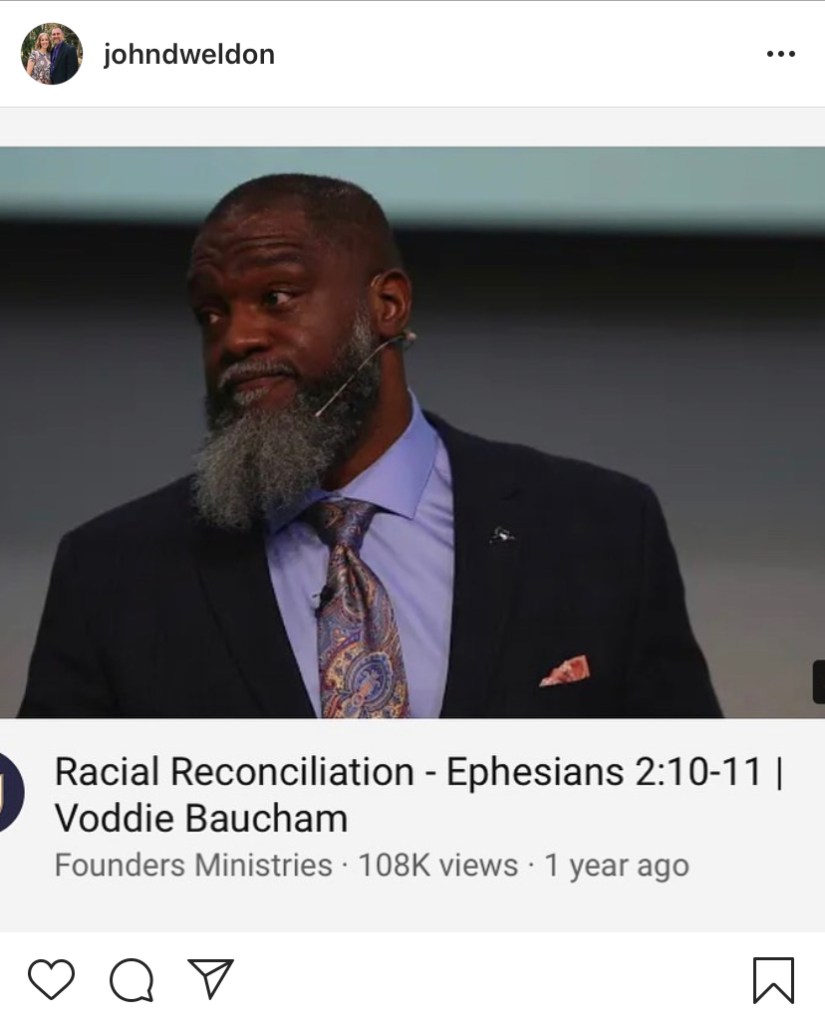
Sunday, I preached that critical theory was a major danger to the gospel and simply being in a oppressive group did not make someone a racist, rather, it is the actions of people that counted. That didn’t go over well. I posted my #BlackOutTuesday square in recognition that racism and police brutality does occur and I lost friends. A few days later I decided to accidentally on purpose trigger (that means to make someone mad) some more people. I posted a video of a African-American preacher who claimed that everyone has a responsibility in the discussion on racism and I lost more friends. I had discussions with people all throughout the week; family, friends, young and old. Every time I opened my mouth or pressed “post” on social media I lost. Don’t worry about me, I’m not in it to please people.
I have picked a side. It’s not the left or right, white or black, republican or democrat, conservative or liberal. I’ve decided to pick my Savior Jesus and His word which is the only thing I believe can change the hearts of people. I’ve decided to just go back and be a shepherd again.
As a shepherd I will…
Care for the Flock: I’m going to be there for you. I’m not going to leave you in the field and go back to the Father’s house. I will sleep out in the field and pin with you. I will listen to you and hear your concerns hurts and heartaches. You can vent to me anytime you need to.
Protect the Flock: I will warn you when I see dangers coming. Whether these dangers are bad theology or philosophy sneaking up on you or you are so busy grazing in worldly pleasures you don’t see the cliff a few feet away. I will sleep in the doorway of the sheep pin and put your life before mine. I may use my rod to gentle guide you back away from unseen dangers.
Feed the Flock: I will do my best to lead you to the greener pastures so you can graze on the richness and goodness of God’s Word over anything else you might desire to eat. I will give you a complete diet of the whole counsel of Scripture, not just the sweets and carbs that we all easily enjoy. If I see you are malnourished I will place what you need before you.
Sheer the Flock: As you grow as a sheep one of my duties as a shepherd is to sheer you in the right season. This might seem like a selfish task or painful to you but it is necessary for you. I will help you shave off what is burdening and holding you down. I will help remove the outer fleece so that new growth can occur. Your new coat will grow back in time and be much better and not littered with the debris and things you pick up in the world.
Seek after the Lost: I will come looking for you when I can’t find you. No matter if you walked away on your own or you were led astray by something or someone else. If the actions or inaction of Christians around you turns you off from following Christ and causes you to walk away I am not giving up on you. I will pick you up and put you on my shoulder. I know the True Shepherd and how He did not abandon me. I will bring you back to the protection and fellowship of the other sheep and mend any broken bones or hurts the best I can. If you are a sheep that is lost and all alone without a home you can join our flock, it gets noisy, sometimes we don’t smell all that good and it’s kinda like organized chaos but at least you will have what you need.
As unpopular as it is right now, I’m going to stand with the Lord and stay on his side being an equal opportunity offender. Because the gospel is offensive. Jesus teaches us to love our enemies, forgive those who have wronged us, be anger but not sin, overcome evil with good, and to love our neighbor as we have loved ourselves. You can expect these and other messages to come from me over the next few weeks and months as I shepherd the sheep.


 Posted by John Weldon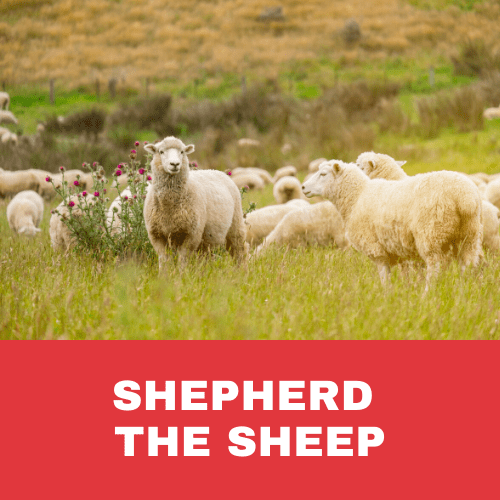

 DId God Really Say...