Sons and the Son

January 10, 2024

 January 10, 2024

Genesis 10 is the genealogy of Noah and his three sons. There are seventy sons listed from the three sons of Noah. Seventy is a number in Jewish culture of completeness. There were seventy that were listed traveling to Egypt from Jacob’s family during the famine (Genesis 46). Many have speculated that this genealogy is not a direct father to son list. It may only list the predominant sons in the family lines. These names only account for the men in the family and very few women are named in many of the genealogies in the Bible. Japheth (vv. 2-5) descendants are said to have settled near the seas (likely the black, Caspian, and Mediterranean seas). Next the sons of Ham (vv. 6-20) are named and many of the names are actually groups of people rather than names. This cursed line of sons connects with the nation of Babylon. Last the sons of Shem (vv. 21-32) are listed briefly but they will take a more prominent role in Genesis 11 with the godly line that is listed. One final thing to note, In Genesis 10 verses 5, 20, and 31 talk about “individual languages” this is not a contradiction with Genesis 11:1.  We must remember the author of Genesis is writing looking back at the 70 people groups as they are today.

Psalm 10 is a psalm where the author seems to wonder about the hiddenness of God. “Why, O LORD, do you stand far off? Why do you hide yourself in times of trouble?” v. 1. The wicked seem to get the upper hand and the psalmist seems to think he is prosperous over the righteous people. There are probably times in our lives when we feel the same way. People that cheat or cut corners, to get ahead at work or school seem to never get caught. One of the characteristics of the psalms is their personal nature and the raw emotions that the authors record. It can help us identify with others and know that we are not alone in our thoughts. In the middle section of the psalm the author cries out to the Lord to do something, “Arise, LORD! Lift up your hand, O God. Do not forget the helpless” v. 12. At the end of the psalm the author reminds himself of the promises of God. “The LORD is King for ever and ever; the nations will perish from his land. 17 You hear, O LORD, the desire of the afflicted; you encourage them, and you listen to their cry” vv. 16-17. There are two promises here. First, God will judge the nations, those who do evil will be perish. Second, God hears their cry for help and he will encourage them.

In John 10, Jesus is the good shepherd who looks after the flock. Jesus is contrasted against the devil who comes in personified as the wolf. One of the most used examples and illustrations in the Bible is that of sheep and the shepherd. That is what the nation of Israel knew best. They were nomadic shepherds for the most part. Jesus was throwing some shade toward the religious leaders of the day, calling them “thieves and robbers” v. 8. Jesus knew they didn’t care for the sheep like He did. Verse 10 has always been a special verse to me. It shows the black and white motivations between the devil and Jesus. “The thief comes only to steal and kill and destroy; I have come that they may have life, and have it to the full.”

The last part of John 10 is a continued conversation between Jesus and the religious leaders. Jesus boldly claims to be the one that gives eternal life. The religious leaders question him and try to get him to profess that He is the Christ. Jesus tells them they would know if they were really His sheep. Jesus boldly claims to be “one” with the father and this incites the Jews to pick up stones again to stone Jesus. Many contemporaries who deny that Jesus claimed to be God have looked at John 10:28-30 and sold it short. They try to say Jesus meant “one in spirit” or some other less than full meaning. The key is the response of the Jews in verse 33. “’We are not stoning you for any of these,’ replied the Jews, ‘but for blasphemy, because you, a mere man, claim to be God.’” They knew exactly what Jesus meant when he said it and if they misunderstood what Jesus meant, why then would Jesus not correct them and deny he meant that? The answer can only be, because that’s exactly what Jesus meant to say and imply.  All the other contemporary religions and cults that branch off of Christianity will all differ here with who Jesus is.

What else do you see in these chapters? What words, phrases, or themes stick out to you? Add your thoughts below.


Mindful

January 9, 2024

January 8, 2024

Read Genesis 8, Psalm 8, John 8

What are some things that you will never forget? Depending on how old you are, you might recall some of the details surrounding; the moon landing, when JFK died, when Elvis died, where you were when the challenger space shuttle exploded, the 9/11 attack, when Michael Jackson passed away, when a family member got married and on and on. These were big events in your life that made an impact on your mind.  On a side note, many skeptics will balk at the idea of the gospels being written down years or decades after Jesus had died and risen from the dead, but we must remember that Jesus’ resurrection was a huge event like many of the ones listed above. You might not remember what you had for breakfast 20 years ago, but you will remember the significant events that impacted your life.

Genesis 8 starts out, “But God remembered Noah” (and all the animals too). We are not talking about a God with amnesia here. This phrase is an anthropomorphic (places a human-like character trait on an object or something not human) phrase that shows that God cares and has compassion for Noah and the animals. God is the creator of the universe and everything in it. He could have hit the reset button, but he didn’t. He chooses to save that which He has compassion for. Over a year passes and the ark finally comes to rest on the mountains. The Lord dries up the waters and tells Noah he can leave the ark safely. The first thing Noah does is to offer and sacrifice to God for His protection. When we come to appreciate and love God for what He has done for us, we should desire to thank Him or give Him praise.

In Psalm 8 we have a similar theme. David gives praise to God, “O LORD, our Lord, how majestic is your name in all the earth!” v. 1, David is in awe of who God is and for His interest in His creation. He acknowledges that God is the creator of the “moon and stars” v. 3. Yet in verses 4-5 he sees the personal nature of God, “what is man that you are mindful of him, the son of man that you care for him? 5 You made him a little lower than the heavenly beings and crowned him with glory and honor.”

In John 8 we read the story of the woman caught in adultery. Most bibles have a note in them telling you that the earliest manuscripts do not contain John 7:53-8:11. My opinion is that it was not in the original manuscripts but was likely a scribal addition later when documents were being copied. I personal believe this interaction between Jesus and the women took place and was later added in from other sources or the oral tradition. Nothing in the 12 verses seems out of place or “unlike Jesus” from the other Scriptures. Jesus craftily keep the Law of Moses and single handedly dismissed the woman’s accusers. Jesus was mindful of this sinful woman and showed her compassion in her time of need.

The majority of John 8 is a dialog between Jesus and the Pharisees. It is started by Jesus’ statement, “I am the light of the world.” There are seven “I am” statements in the gospel of John. Jesus and the Pharisees hold a discussion over the authority to do and say the things that Jesus does. Then the conversation turns over to fathers. Jesus claims that God is His Father, the Pharisees want to name Abraham as their father, but Jesus disagrees. “’If you were Abraham’s children, said Jesus, ‘then you would do the things Abraham did. 40 As it is, you are determined to kill me, a man who has told you the truth that I heard from God. Abraham did not do such things’” vv.39-40. The Pharisees object that they are not illegitimate children and Jesus agrees with them here, but plot twist, Jesus tells them “You belong to your father, the devil, and you want to carry out your father’s desire” v. 44.

 In the final section of John 8, the pharisees get mad and start name-calling Jesus. That’s usually what happens in an argument when one side is losing or they don’t have their facts straight, they resort to ad-hominem attacks (a.k.a. name calling). Christians are not exempt from this either. We need to study and know what and why we believe least we get embarrassed and start it too. In John 8:58 Jesus makes one of the most pivotable statements in all the Gospels. The confused pharisees think Jesus claims to be alive during the time of Abraham, He was just not like they think. They question Him on this and Jesus replies with a quote from Exodus 3. When Moses asks God in the burning bush what His name is, God responds with “I AM WHO I AM” v. 14.  Jesus tells the pharisees, “before Abraham was born, I am!” v. 58. You might say, well that’s not really saying He is God, but to the pharisees of the day they knew exactly what Jesus meant.  We can tell by their reaction, they picked up stones to stone him. If someone were to commit the sin of blasphemy the punishment was death by stoning. We will see even more clearing from another interaction with Jesus and the pharisees in John 10 that this is what was going on.

What else do you see in these chapters? What words, phrases, or themes stick out to you? Do you understand just have mindful that God is toward you just like he was with Noah, David, and the woman caught in adultery? Add your thoughts and comments below.  


Flood

January 7, 2024

January 7, 2024

Read Genesis 7, Psalm 7, John 7

Genesis 7 is the continuation of Noah and the flood. When there are really well-known stories in the Bible that you read, I would urge you to pay very close attention to the details that you read. Many times, the details get changed unintentionally because they are repeated so often by people like the “telephone game” you may have played when you were younger. What things do you see that you may have forgotten or read too quickly. Verses 1-2 explain that Noah was to take seven pairs of clean animals and one pair of unclean animals on the Ark. Verse 9 explains that these animals “came to Noah and entered the Ark.” I’m sure Noah was glad he did not have to go search for them all.  Genesis 7:17 says that it rained for 40 days and 40 nights. All throughout the Bible the number forty is often used as a “testing” period in someone’s life. Israel spent 40 years in the wilderness, Jesus fasted for 40 days before he was tempted by the Devil, and Elijah ran for 40 days to Mount Horeb away from Jezebel (1 Kings 19:8). What testing times have you had in your life? How did you weather them? God used the Ark to protect Noah and his family. How will you allow God to protect you during testing times?

Psalm 7 continues this same theme of protection. David calls God his “refuge.” He calls out to God to deliver him from “all those who pursue me” v. 1. David then does an interesting thing; he asks God to examine him. “O Lord my God, if I have done this and there is guilt on my hands – if I have done evil to him who is at peace with me or without cause have robbed my foe – then let my enemy pursue and over take me” vv. 3-5. David is asking for justice from God no matter who is at fault. No doubt this is a rare character trait of many people today. People often only want justice when it benefits them all the while ignoring their own failings. The flood in Genesis 7 was God’s righteous judgment on the world for their wickedness.

John 7 records the time Jesus went to the Feast of Tabernacles. The Feast of Tabernacles or Feast of Booths as it was also called was a time where Israel remembered and celebrated how God provided for them when they left Egypt and went into the desert. They would celebrate it for a week by building “booths” to live it for the week.  Jesus had already stirred up some hate from the Jews to the point where they were looking for a way to kill him. Jesus’ own brothers were goading him to go to the Feast of Tabernacles. Why? Not because they wanted his ministry to grow, the Scriptures say “For even his own brothers did not believe in him” v. 5. I’m sure Noah had his nah sayers, but Noah still had his family. Jesus own earthly brothers did not believe in him. Jesus stayed at home and away from Jerusalem.

However, Jesus did delay his going but instead decided to go in secret. He went and began to teach the people. The people are amazed at his teaching and asked, “How did this man get such learning without having studied?” v. 15. The people start putting two and two together and realize this is probably the same man that they are trying to kill for healing on the Sabbath. The Jewish leaders sent the temple guards after Jesus but His teaching is so good that they cannot find it in themselves to arrest him.

The key verse in John 7 is verse 37. The scripture tells us that it was the “last and greatest day of the Feast.” The Jewish tradition tell us that a Rabbi or Jewish leader would take a jar of water and pour it out on the ground while they read from the account in Exodus where God provided the water for Israel from the rock. It is at this point where Jesus exclaims, “If anyone is thirsty, let him come to me and drink” v. 37. Jesus is claiming to be the living water from the Old Testament that was provided for Israel in the wilderness.

What else do you see in these chapters? What words, phrases, or themes stick out to you? How has God provided an ark and protected you in past times? Write your comments below?


Lifeboat

January 6, 2024

January 6, 2024

Read Genesis 6, Psalm 6, John 6

I’m not sure if you have been on a cruise before or not but if you have not, they have a mandatory muster drill that everyone must take part in. A muster drill is a mandatory safety exercise with the objective to familiarize all guests and crew with the location (muster station) where they are to assemble in the unlikely event of an emergency, as well as additional safety information. You usually assemble at your assigned lifeboat where if need be, you can safely board and leave your cruise ship. In Genesis 6 we see a different type of lifeboat that God has created for Noah and his family. The Bible says Noah was “a righteous man” and had “found favor with God.” The rest of the earth, had become wicked and corrupted in the ways. The chief verse that gives us a hint at how bad it got says, “every inclination of the thoughts was only evil all the time” v.  5 What percent of thoughts in our culture would we guess is focused on evil? With the exception of Noah, it appears to be close to 100 percent in the days of Noah. How important it is to guard our thoughts? Out of our thoughts come our beliefs, our words, and our actions.

God gives Noah the plans to build an ark. This rather large boat took years to build and tells him that he will establish “my covenant with you” v. 18. A covenant was a promise and agreement made between two parties (Gen. 9: 8-11). This was the first time this word is used in the Bible. This past summer my wife and I made it up to Williamstown, Kentucky to see the life-size ark that was built by Ken Hamm and the Answers in Genesis organization. I highly recommend a visit. The people are amazing friendly and the information you will gain will no doubt help you as you think about all the how’s that came with the Ark.

Psalm 6 is a psalm of David. He is crying out to God for deliverance. David questions, “How long, O Lord, how long?” v. 3. David speaks of a flood, a different type of one, “all night long O flood my bed with weeping and drench my couch with tears” v. 6. The circumstances that David is going through have brought him to a place where he felt like God had abandoned him or forgotten him. I know we all have times like that when it comes to God moving and acting in our lives and situations. Like the flood in Genesis 6 we do not know when God may choose to act in our lives as well. We do not know what He is doing in preparation for us in the background. The last few verses of Psalm 6 we see the resolution, apparently God has moved, acted, and delivered David. He writes, “the Lord has heard my cry for mercy; the Lord accepts my prayer” v.9. While we are in difficult circumstances it is harder to keep our faith and trust in the Lord. It is always easier to see when we look back and see the complete picture.

In John 6 we read about one of the larger miracles that Jesus did by feeding 5,000 plus people a meal from five loaves of bread and two fish. What faith Peter had to suggest this could be used by Jesus. Author and apologist, Lee Strobel points out about faith in his book The Case for Faith;

Equally great, Jesus next step is to walk on the water to the boat in which the disciples are miles away from shore. Not much is made of the disciples and their reaction to this, but rather the Gospel of John intentionally focuses on the crowd that is following Jesus. Aware of their motives, Jesus calls them out, “I tell you the truth, you are looking for me, not because you saw miraculous signs but because you ate the loaves and had your fill” v. 26. The crowds were following Jesus for their own personal benefit and not for who He was as Messiah and God in the flesh. This leads Jesus to teach on what really matters, having eternal life and finding life in Him.  At the end of John 6 Jesus tells his listeners that he is the bread of life, there is a comparison with the bread (Mana) that the Israelites ate in the wilderness in Exodus, but Jesus teaches a “hard teaching” v. 60 that many of his followers could not grasp, in response they turn away and leave him. What was this hard teaching, “I tell you the truth, unless you eat the flesh of the Son of Man and drink his blood, you have no life in you” v. 53. Of course, Jesus was not talking about some cannibalistic ritual, but rather speaking metaphorically about his future journey to the cross. Jesus explained this more at the last supper with his disciples the week that he would go to the cross. Why do you seek the Lord? Is it for some benefit that he gives you? He feeds your stomach, and you are satisfied. I’m afraid there is a movement by many contemporary Christians today to claim a part of Christianity, but really for selfish reasons. It has been given the name “Therapeutic Moralistic Deism.” There is no real interest in seeking the God of the Scriptures, rather people try to take on Christian morals for their own personal benefit. They want the happy marriage, the best-behaved kids, to live at peace with people, or to live out the American dream in their lives. Following Christ is hard, it will not win you friends with the world, but it will win you eternal life and favor with the God of creation. I hope you will trust in the lifeboat that is Jesus Christ. He is the thick ice that we can place our weak faith in.

What else do you see in these three chapters? What words or phrases or themes stick out to you? There is so much to pull from these passages. Share you thoughts below.


Sacrifices and Worship

January 4, 2024

January 4, 2024

Read Genesis 4, Psalm 4, John 4

Then we have Cain’s reaction. He kills his brother in anger, not for anything his brother did to him but for what he failed to do himself. Do we ever lash out at others for something that we did or did not do? Is our reaction based on jealousy or covetousness when we were the ones who did not offer our best? It was not a competition between Cain and Abel, God’s response tells us this, “If you do what is right, will you not be accepted?” v. 7. Then God says “sin is crouching at your door; it desires to have you, but you must master it.” Sin is personified as a wild beast ready to attack us. God tells us we must “master it.” This phrase relates to discipline. We can master certain talents, skills, or wisdom. Here we are encouraged to master the choice to give in to sin and fight off the temptation to do something that is not right.

Cain is driven from the area in which he killed Abel. He contests that those who find him will kill him. You might ask, “who is going kill Cain, his parents?” Genesis 5:4 tells us that Adam and Eve had other sons and daughters. What many do not understand about the Scriptures is that many times they only highlight certain people or stories. They do not tell the whole story especially related to the genealogies.

Psalm 4 has some words of advice that Cain as well as we could learn from. Verse 4 tells us a similar thing that James does, “In your anger do not sin; when you are on your beds, search your hearts and be silent.” Our first responsibility is to master our response to our anger.  It’s okay to be angry, especially when we are wronged. Even Jesus got angry when people treated him or his father’s house wrong. David encourages us to “search your heart and be silent.” The next verse he tells us, “offer right sacrifices and trust the Lord” v. 5. My previous pastor used to tell me, “You can’t stop the birds from flying around in the air, but you can stop them from building a nest in your hair.” Simply put, we cannot control what other people do but we can control what is related to ourselves.

John 4 is the story of Jesus and the Samaritan woman at Jacob’s well. Jesus asks for a drink from the well and a conversation begins. Jesus tells the woman that she could have “living water” from him if she only knew “gift of God” v. 10 and who he was. Then Jesus tells her “I who speak to you am he” v. 26. The woman wants to divide with Jesus about the proper place to worship. The Samaritans claimed it was in Samaria while the Jews said it was in Jerusalem. Jesus reminds her that the right place is Jerusalem but that one day it won’t matter where the Father will not be worshiped in either place. Worship is closely related to sacrifice. Who or what do you worship? Is it a job? Family? A Celebrity? A Musician? Hopefully the Lord comes first on that list.

What words and phrases and themes do you see in these verses? What speaks to you in the time and circumstances that you are in now? What things get you angry enough to tempt you to do something you should not? Is the Lord what you worship and what you love more than anything else?


“Sin and Consequences and Believe”

January 3, 2024

January 3, 2024

Read Genesis 3, Psalm 3, John 3

Genesis 3 describes the fall of humanity. Sin is real and so are the consequences. People often make little of sin. We compare ours to others, we minimize our own and point the finger at everyone else. After God confronted Adam and Eve in the garden, the blame game started. Each one pointed the finger at the other. Adam not only blamed Eve, but he even threw some shade toward the Lord with “the woman you put here with me…” v. 12. If you have ever been around children, you know this is par for the course, but sadly adults do not respond much better. Each one had their own consequences, each consequence was different, but related to who they were and the role they had. We must learn to confess our sins. It starts with acknowledging that we are sinners (Romans 3:23) and we need to act where we cannot.

Satan is also real. Here he is disguised as the “serpent” whose sole plan is to mislead and cause doubt to enter the picture. The first four words from his mouth were, “Did God really say” v. 1. According to the latest Barna worldview survey’s, most people who identify as Christians do not believe in a literal Satan.

Four out of ten Christians (40%) strongly agreed that Satan “is not a living being but is a symbol of evil.” An additional two out of ten Christians (19%) said they “agree somewhat” with that perspective. A minority of Christians indicated that they believe Satan is real by disagreeing with the statement: one-quarter (26%) disagreed strongly and about one-tenth (9%) disagreed somewhat. The remaining 8% were not sure what they believe about the existence of Satan.[JW1] 

If Adam and Eve could not fend off the temptation of the servant what hope is there for us? Although we are like Adam and Eve; descended and designed in like manner we have hope. The solution for us all, one Adam and Eve would not see, was hinted at in the Garden when God pronounced his judgment on the serpent. “he will crush your head, and you will strike his heal” v. 15. A future single male descendant of Eve’s would crush the serpent one day. We know now looking back that Jesus was this promised deliverer.

In Psalm 3 we read a psalm of deliverance. David wrote it when he fled from his son Absolom who was trying to take the kingdom away from his own father. In the midst of trouble, David would call on the Lord and trust that God would be “a shield around me” v. 3. Even when David was in the minority and only had a few hundred men, when he was protected by the Lord, he was confident in God’s deliverance.

One of the repeated words and theme in the Gospel of John is the word “believe.” It is used 98 times in the fourth gospel and only 56 times in the remaining 26 New Testament books. John 3 is a much beloved chapter in the Bible. It contains John 3:16 where Jesus tells Nicodemus “that whosoever believes in him shall not perish but have eternal life.”

Let’s not forget the grace gift that God gave to Adam and Eve in Genesis 3. He “made garments of skin” for them and covered their nakedness. The implication is that an animal had to be sacrificed to provide the skins for them. This was just the beginning of the sacrifices that would have to be made for everyone going forward who sought forgiveness. Jesus came to give us the ultimate grace gift by giving his life on the cross for our sins. Jesus death on the cross was the final sacrifice that was made for the sins of all humanity.

What else sticks out to you in these chapters? What words or phrases catch your eye? Add your thoughts below.


 [JW1]https://www.barna.com/research/most-american-christians-do-not-believe-that-satan-or-the-holy-spirit-exist/


Sabbath, Work, and Some Weddings

January 2, 2024

January 2, 2024

Read Genesis 2, Psalm 2, John 2

Life is a mix of work and play. We see both of these elements in Genesis 2. Some people are work-a-holics, while others are just plain lazy. We must find a proper balance. The Sabbath was a day of rest. God does not need the rest, but it was an example set by God for humanity to follow. We are living in the New Testament times and not under the Mosaic Law. We do not have a legal obligation to follow the Sabbath today, but we would be wise to observe a Sabbath in our lives on a weekly basis. On the other side of the coin, God created man and placed him the garden “to work it and take care of it” v. 15. You likely had New Years Day off and today you are back to work. Work is good for the human soul. It was a part of God’s plan before the fall, before sin (although sin made it more laborious). Work gives us a sense of purpose, accomplishment, and a healthy pride in what we have done. Work accomplishes good things for us and others. The Evangelist Jonathan Edwards who worked tirelessly to preach the gospel across America still made time for a Sabbath. While traveling on the Connecticut River he recorded,

“At Saybrook we went ashore to lodge on Saturday, and there kept the Sabbath;
where I had a sweet and refreshing season, walking alone in the fields.”[JW1] 

Whitney, Donald S. Spiritual Disciplines for the Christian Life.

Some skeptics object to Genesis 2 as a contradictory second creation account. Rather it is continuation of the creation account but zoomed in from a 30,000-foot up view down to the garden view. Genesis 1 looks at the creation of the universe and Genesis 2 homes in on the creation of humanity. It ends relating marriage to the creation account with the often quoted “a man will leave his father and mother and be united to his wife, and they will become one flesh” v.24.

Contemporaries push back on this narrative. Is Adam superior to Eve because he was created first? Isn’t the creation story a patriarchal story of oppression? Does Adam name his own wife as an exercise of power, after all, Eve is called a “helper” v. 20? The answer, “no” to all these accusations. Sixteen times God is called Israel’s helper (Ex. 18:4, Deut. 33:7, etc.) and He is not the lessor in that relationship. Both men and women are equal in value but differ in their roles in the family and the church which follows the creation narrative.

Psalm 2 opens with a question, “Why do the nations conspire and the peoples plot in vain?” The question of who would dare challenge the authority of God and his power. God dares any nation who would come against his “Anointed One” v. 2, The psalm is full of language that points not only to an earthly king in Israel but also to Jesus. The New Testament connects Psalm 2 in Acts 4:25-26, Acts 13:33, and Hebrews 1:5.

The themes of weddings and authority continue in John 2. Jesus’ first miracle was at a wedding. He turned water into wine. Not just any water, it was “the kind used by the Jews for ceremonial washing” v. 6. Think of that as water unfit to drink, meant for washing hands and other ceremonial items. Jesus took something impure and made it into “choice wine” v. 10 that people would brag about and enjoy. This first miracle was a statement about Jesus’ mission and ministry. Second, Jesus purifies the temple and rids it the money-changers by creating a whip and driving out those who had made the temple into “a market.” What has the contemporary church made the church into? Are we guilty of turning it into anything that would displease Christ? When Jesus is questioned about his actions the subject of authority is raised upon Jesus. “What miraculous sign can you show us to prove your authority to do all this?” v. 18. Jesus looks ahead symbolically to the cross where his physical body would be destroyed but God would “raise it in three days” v. 20.

What else do you see in these chapters? What words and phrases catch your attention as you read?  How does the theme of authority flow through each of these chapters individually? What questions do you have from these chapters? Add your thoughts below.


 [JW1]Whitney, Donald S. Spiritual Disciplines for the Christian Life. Colorado Springs, CO: NavPress, 1991. pg, 197.


Context is Key: Cultural Context

June 8, 2020

Hey friends! This is the third of three posts about understanding the Bible in the proper context. You can go back and look at historical context or literary context if you missed them. Cultural context, which is sometimes categorized in historical context is our topic in this post.

Cultural context or some times known as social context, includes topics like;  social traditions, economics, political systems, and other customs that were common during the time the book was written. Darrell Bock describes it as two-fold, “By studying the cultural context we are trying to find out what life was like for the ancient people who wrote the Bible and who were written about in the Bible.1

Under social traditions you might find different topics like Jewish weddings, arranged marriages, local customs and celebrations, or how knowledge was passed on from generation to generation. One example of this is in John 2, when Jesus is at the wedding in Cana and Mary, Jesus mother is there. In the first couple of verses we learn that the wine for the wedding is gone and Mary comes to Jesus to ask Him to intervene. Jesus responds with “Woman, why do you involve me?” This response might seem crass and insensitive to us in modern times by not calling her by her name or even by “mother” but in the first century calling a lady “woman” was a common informal address. Some translations like the NIV 1984 and NLT attempt to soften the language barrier by adding the word “dear” making it more palatable to our contemporary ears. The 2011 NIV translation took it back out. See the Translation comparison below.

NIV “Woman, why do you involve me?” Jesus replied. “My hour has not yet come.”
NLT Dear womanthat’s not our problem,” Jesus replied. “My time has not yet come.”
KJV 1900 Jesus saith unto her, Woman, what have I to do with thee? mine hour is not yet come.
ESV And Jesus said to her, “Woman, what does this have to do with me? My hour has not yet come.”

Under economics you can understand money and the standard currencies of the ancient world. When you read about denarii, shekels, or talents the cultural context asks what does that relate to in our modern economic standards combined with their weights? Coins made in the Roman empire were often stamped with the image of the emperor’s likeness and can be used to date archeological finds because of their unique images. Likewise weights and measures are equally important. Knowing the approximate values of a mina or a shekel  versus a talent in gold and silver. The cubit is probably the most well known length that measured from the tip of the finger to the elbow or about 18 inches. There is also the span, hand breadth, finger breadth as well as other descriptive distances like “a day’s journey” (about 21 miles) and a “roman mile” which is about nine tenths of a English mile today.

Click here for a link to a conversion table that you can use.

A few other cultural examples to point out would be the traditional greeting of a kiss in the Bible. Some people will try to make something out of 1 Samuel 20:41 between David and Jonathan saying that they were gay. “After the boy had gone, David got up from the south side of the stone and bowed down before Jonathan three times, with his face to the ground. Then they kissed each other and wept together—but David wept the most.” This was nothing more than a common greeting between close friends.

Finally, the length of men and women’s hair in the Bible will sometimes get brought up by contemporary readers. Some will balk, “The Bible says women shouldn’t have short hair” or that “men shouldn’t have long hair” Some preachers throughout history like Jonathan Edwards have preached this, but is that really what the Bible says? Let’s look at 1 Corinthians 11:11-15.

“In the Lord, however, woman is not independent of man, nor is man independent of woman. 12 For as woman came from man, so also man is born of woman. But everything comes from God. 13 Judge for yourselves: Is it proper for a woman to pray to God with her head uncovered? 14 Does not the very nature of things teach you that if a man has long hair, it is a disgrace to him, 15 but that if a woman has long hair, it is her glory? For long hair is given to her as a covering.”

Paul does not actually say anything about women having short hair, he just mentions that her long hair is given for her glory. It adds to her beauty and at the same time Paul warns women not to lose sight of their modesty in 1 Timothy 2:9-10 and Peter similarly in 1 Peter 3:3. These issues have to deal more with cultural norms than a prescription for believers today. One common way that prostitutes would identify themselves to Roman soldiers who traveled through the towns was to cut their hair short or leave their hair uncovered. Perhaps Paul wanted women to avoid any appearance of this behavior by complementing the beauty of long hair.

The cultural context is rich with so many things to learn about the culture in the Bible. If you are studying a passage and want to make sure you understand it best I would advise you not to skip the cultural context and jump straight to the meaning of a passage. Often commentaries will give a considerable amount of pages at the outset of the commentary that is dedicated to the author, date, purpose of the book, and the context in which it is written. Take some time and read a bit about the cultural context and it will easily enrich your teachings, sermons, or simply the enjoyment of the text as well as answer many questions you might have about a passage.

1. Logos Pro Team, LT271 Study the Bible with Logos: Jonah 1, Logos Mobile Education (Bellingham, WA: Lexham Press, 2016).


Context is Key: Historical Context

February 3, 2020

Hey friends, the best way to understanding the Bible is through its context. If you get the context wrong you are liable to interpret the passage that you are reading wrong as well. According to the Oxford Dictionary context is defined as, “the circumstances that form the setting for an event, statement, or idea, and in terms of which it can be fully understood and assessed.” Bible scholar Darrell Bock divides context into three areas of study, historical context, social-cultural context, and the literary context. We will briefly look at these three areas in three different posts and dig deeper into them over time.

Historical Context

The historical context has to deal with factors that relate to the setting of the book/letter in the time that it was written as well as the event or person in the book that is being described. Factors that make up the historical context might be things like technology, nations in power, historical people and events, geographic boarders, and more.

One example where having the right historical context is found in Revelation 3:14-16.

“To the angel of the church in Laodicea write: These are the words of the Amen, the faithful and true witness, the ruler of God’s creation. I know your deeds, that you are neither cold nor hot. I wish you were either one or the other! So, because you are lukewarm—neither hot nor cold—I am about to spit you out of my mouth. (NIV 1984)

Years ago as a teen I remember reading this verse and wondering why God would rather the church at Laodicea either be hot or cold, but not lukewarm? I had always heard other Christians challenge students to be “on fire” for the Lord in their faith. I began thinking allegorically, maybe Jesus would rather have us to be either “on fire” in our relationship with Christ or either completely “cold” where we don’t even reflect ourselves as Christians than for us to be “lukewarm” in our faith and not be a very good example to others around us. I wrongly associated these verses with modern thoughts of my day.

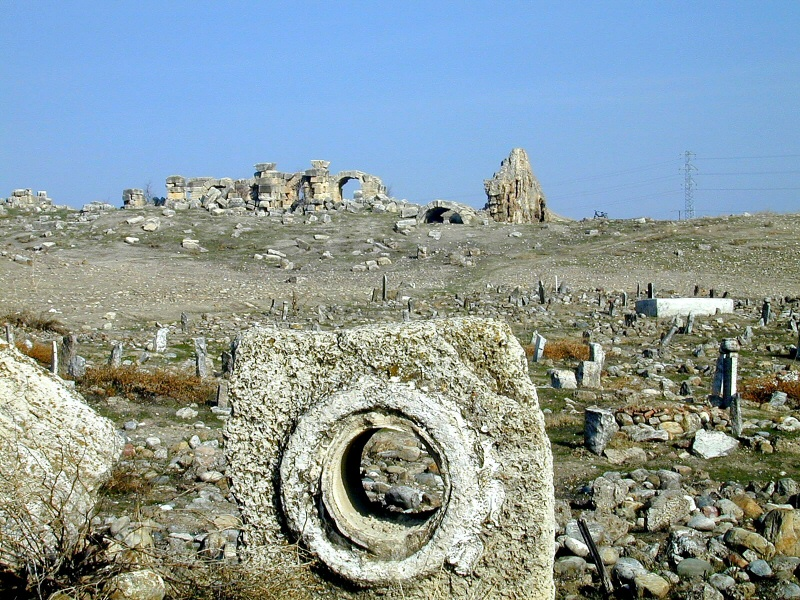
Laodicea Aqueduct

Laodicean Aqueduct with bathhouse remains from Logos Bible Software

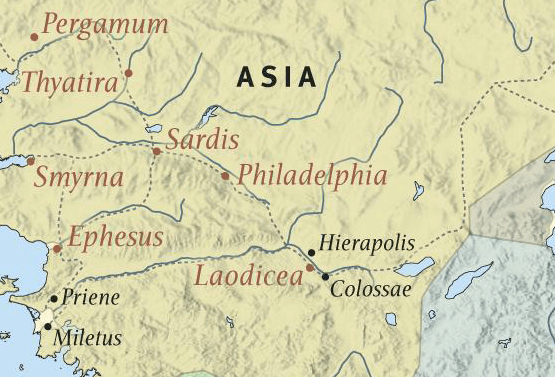
Revelation Cities Map

If I had known the historical context of the city of Laodicea I would have understood this passage in a completely different way. The Lexham Bible Dictionary fills us in more on history of the city. The comment like has allusions to “the Laodicean water supply, which was lukewarm—particularly unappealing in contrast to the cold stream-fed water in nearby Colossae and the hot springs in Hierapolis, which were perhaps valued for more pleasurable bathing or medicinal usefulness.”1 The city of Laodicea was not seated near the preferred water or cold water of the neighboring cities. In this case being “cold” would have been a good thing and not a reflection of a lack of a relationship with Christ.

Here are two other examples we can look at. First, from the Old Testament, we learn about Solomon’s massive wealth and military strength in his collection of chariots. Today’s reader might be tempted to scan past the inventory that Solomon had that is recorded in 1 Kings 4:25. “Solomon had four thousand stalls for chariot horses, and twelve thousand horses.” You might likely view these chariots and horses as primitive as compared to the weapons we have today but this is the exact opposite that the author is trying to convey. In Solomon’s day the chariot was the most advanced tool of war. “Many of the biblical references to chariots occur in the books of 1–2 Kings. In those books, the references include battles as well as the number of chariots certain kings had under their command. For example, 1 Kings 10:26 records that Solomon had 1,400 chariots and 12,000 horsemen, and 1 Kgs 10:29 lists the cost of a chariot as 600 shekels of silver—an explicatory note concerning Solomon’s wealth.”2

Map of Israel

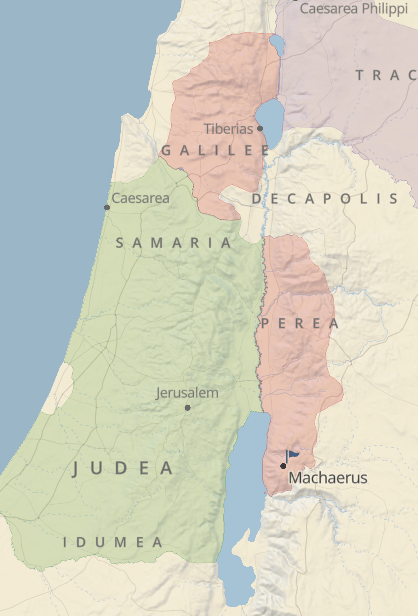
1st Century Israel

Moving back to the New Testament, in John 5:1 we read, “Some time later, Jesus went up to Jerusalem for a feast of the Jews.” It has been pointed out by many today that Galilee (where Jesus was coming from) is north of Jerusalem. Skeptics will ask, “how could Jesus go up if he was traveling south?” The answer is geography. When Jesus left the region of Samaria to go to Jerusalem he traveled up (in elevation) to Jerusalem. For those who live in the united states, do not get a picture of the Appalachian or Rocky Mountains. The mountains in Israel are much milder, but they are big enough to warrant the description of traveling up. Coincidentally this is also why when Jesus tells the parable of the Good Samaritan (Luke 10) where the man travels “down” the road to Samaria. The people in the first century knew nothing about magnetic north or compass headings but, knowing geography answers the question.

Look for more historical context in future posts and feel free to share what you are reading or if you have a question about a passage in the Bible.


1) David Seal, “Laodicea,” ed. John D. Barry et al., The Lexham Bible Dictionary (Bellingham, WA: Lexham Press, 2016).

2) Matthew James Hamilton, “Chariot,” ed. John D. Barry et al., The Lexham Bible Dictionary (Bellingham, WA: Lexham Press, 2016).


Translations: Which One is the Right One?

January 25, 2020

How many times have you heard that we can’t trust the Bible because there are so many different versions or that it has been changed multiple times? Maybe you have heard someone else make a comment about a translation either good or bad? Even worse, skeptics or unbelievers will make a claim that some word in our current versions today was not in the original version adding doubt to what it says. With so many different versions which one is right or should you choose? In this blog, we will look at some history behind the translations, the differences between them, and some basic terminology you will want to be familiar with. We will dig deeper into this issue in a later post.
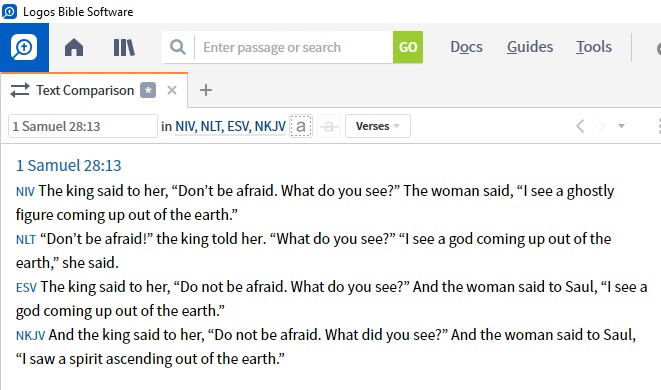
Logos Screen Shot

A Text Comparison on 1 Sam. 28:13 in Logos Bible Software.

First, lets start with a few basic terms.

Autograph – The original document that was written.

Manuscript – A hand written copy of the original document. The copy could either be a copy from an autograph or another manuscript. There are other types of copies that were made (minuscules, codexs, and unicals) but we will save those for later.

Textual Variant – A single difference between two manuscript copies. They could be as little as a single letter or word and occasionally longer phrases, or entire section.

Family of Manuscripts – A group of handwritten manuscripts that share characteristics and similar textual variants usual by a location.

Translation – A copy of a text from language to another. There are some translations that keep the same original language but cover a longer period of time and are considered a translation by the larger changing of words and idioms because of their defining cultural differences. For Example: The 1611 King James Version is a different translation than the 1900 KJV translation that most people use today.

The best option is to read the Bible is in its original languages (Greek and Hebrew) but for anyone who has not studied the languages their only option left is to read a translation.  Are you ready for this next statement? “There are no perfect translations.” Any time you go from one language to another it is not a literal word to word translation.

There are a number of reasons why translations differ from each other. The first reason is because of the theory of translation that is used. Translators can aim toward a  formal equivalent style (word for word) where they try to match words directly from the original language to the receptor language. These are often called “literal” translations but, remember this is not completely accurate as literal word for word translation is impossible. The KJV, NKJV, NASB, ESV, and Interlinear are examples of formal equivalents.

Translators can aim toward a dynamic equivalent or functional equivalent style (phrase for phrase) where they attempt to convey the message in a more readable manner through grammar, language, and style. For examples they may update biblical weights, lengths, and time measurements or change cultural idioms to match the current idioms understood today. The NLT, NIV, TNIV, NRSV, and CSB are examples of dynamic equivalents often used today.

Last, translators can aim toward a free translation or paraphrased version. According to Fee and Stuart, a free translation is “the attempt to translate the ideas from one language to another, with less concern about using the exact words of the original. A free translation, sometimes also called a paraphrase, tries to eliminate as much of the historical distance as possible and still be faithful to the original text.[1] The Living Bible and the Message Bible are examples of a free translation.
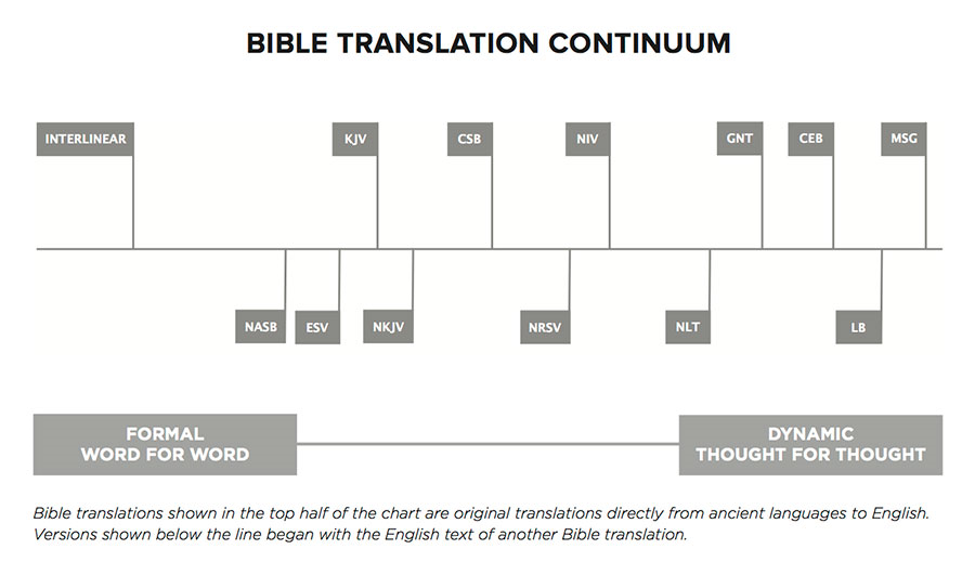
Translation Continium Chart

A second reason why Bible translations differ is because of exegetical decisions that the translator(s) make based on the language and the context that it is within. The screenshot above with 1 Samuel 28:13 is a perfect example of this reason. Both the NLT and ESV use the word “god” in their translations while the NIV uses the word “ghostly figure” and the NKJV uses “spirit.” The original Hebrew word used is “elohim” and you might be familiar with this word as a name for god. This is true a vast majority of the time but occasionally elohim can can also be used in other senses as well meaning angel, spirit, or a spiritual being.

Try This: How many different ways can you use the word “hand” in a sentence? I can think of about eight different ways the word is used and means something different in the context its used.

Another place in Scripture where this exegetical decision-making is found is in Psalm 8:5. The different translations use “angels” (NIV, NKJV), “God” (NLT), or “heavenly beings” (ESV). But what makes it interesting is that the author of Hebrews quotes Psalm 8:5 in Hebrews 2:7 and uses the Greek translation of the Old Testament (The Septuagint) which uses the distinct Greek word for “angels.”

Textual Criticism is another reason that some translations vary in their wording. You can imagine that because we have so many manuscript copies of the Old and New Testament documents that there are quite a number of textual variants between the copies over the hundreds and even thousands of years that have passed. It is not my aim to dive into a deep discussion on textual criticism in this post, I will save that for another post. Because of the differences between some manuscripts or family of manuscripts sometimes translators are forced to make a decision about which word to use because of a discrepancy. However, there is no reason to fear these textual variants. 99.5 percent of them are missing/added letters that might change a word into another word.

Try This: How many English words can you change into a different word by adding or deleting one letter? Example: Bran –> Brain or There –>Here.

The remaining half a percent of variants are minor and do not change any doctrine or theology that the Bible teaches. The translators will examine the remaining texts in question and choose the word they believe the original text their manuscript represents. Again, have no fear, most modern Bibles today will put the opposing variant in footnotes at the bottom of the page in your Bible so you can see the differences yourself. This gives us confidence and comfort knowing exactly what we have.
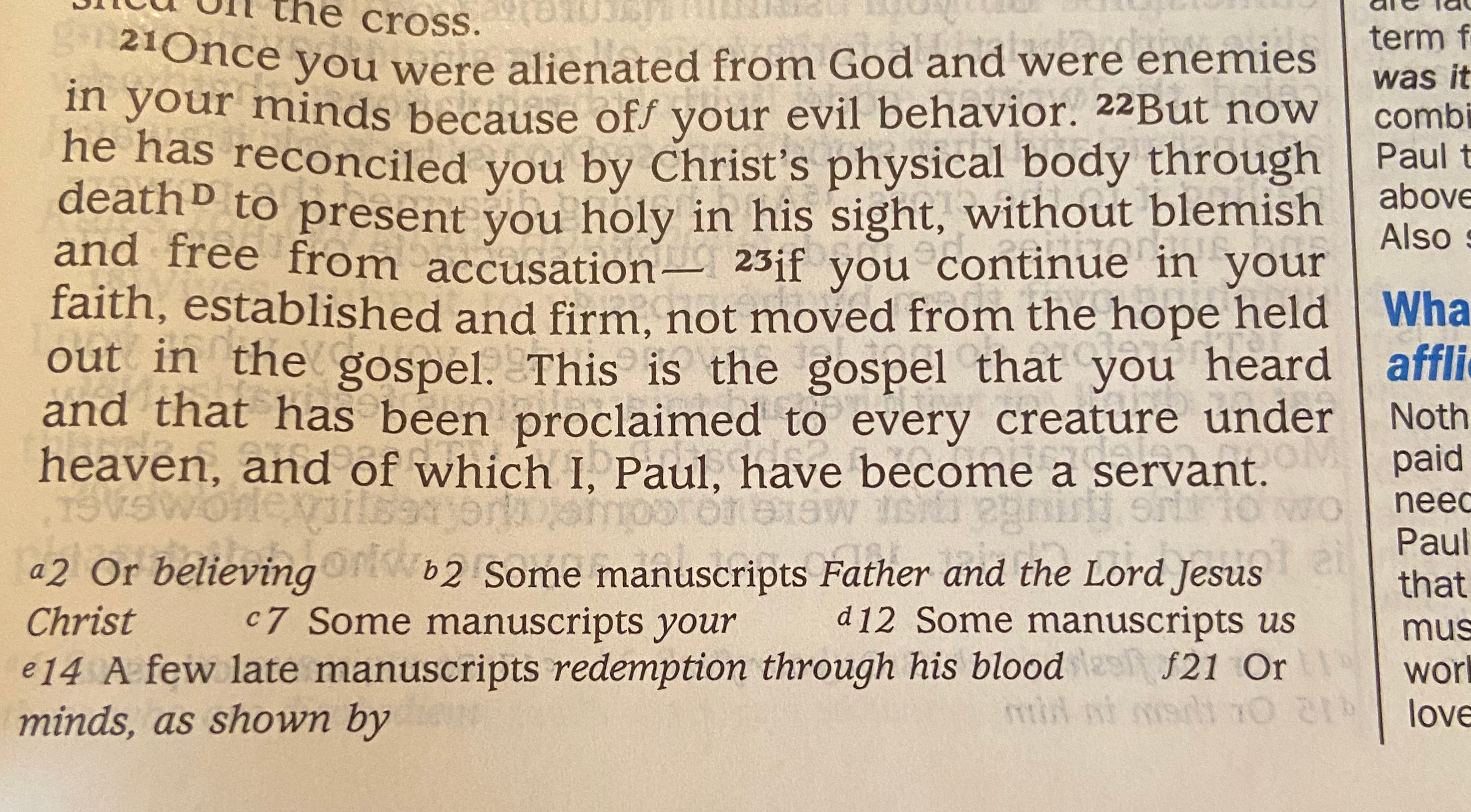
IMG_9884

Footnote on Colossians 1:14

These variants usual are separated by the different families of manuscripts because of the “inbreeding” that occurs copying other manuscripts in nearby locations. There are generally 3 families that are recognized by location; Western (mostly Latin) texts from Italy and the West, texts from around Asia Minor in the east (Byzantium, in what is now Turkey), and those from Egypt, particularly Alexandria. The Alexandrian texts are currently the oldest surviving manuscripts (thanks to the dry Egyptian climate) but the Byzantine manuscripts are far greater in number and can allow greater accuracy in seeking the original text. The majority of current scholarship leans toward the Alexandrian manuscripts as the more accurate.

The example in the picture above, from Colossians 1:14.
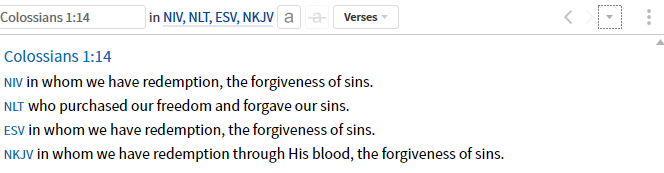
Col 1 14

The KJV and NKJV both have the phrase “through his blood” while the other translations do not. This is because the KJV and NKJV are translations build from later copies of the Western manuscripts and the Textus Receptus (TR) which carried over 1,000 years of copyist errors before many more older manuscripts that have now been discovered. Many “King James only” loyalist have accused the other translations of “taking the blood out” of their translations. Not to fear, the blood is in all the manuscripts in Ephesians 1:7.

One final area that causes translations to differ is the constant changing through time that words seem to undergo. A classic example is 1 Peter 2:12 which in the KJV the word “conversation” is used and in newer English versions the word “conduct” is used instead.  This is because in the time that the KJV was written the people would have understood conversation to be how they conducted themselves while today we would understand conversation to refer specifically to speech and not actions.

You may have seen the article floating around social media about the word “homosexual” being added to the Bible. In Greek, Paul uses two words that make up the English phrase  “men who practice homosexuality” (ESV).  Arsenokoitai and malakoi are the two terms that Paul uses.  One for the male active partner and the other for the passive partner. So in the KJV (before the term was coined by a German psychologist) you have the phrase “nor effeminate, nor abusers of themselves with mankind.” In later translations the word “homosexuals” replaces the long phrase in the KJV translation.  In Greek Arsenokoitai literally means “men who bed men.” If you want to dig deeper on this subject you can read my blog Open Letter to Bishop Richard Wilke here.

There are other reasons why translations may differ but these are the main reasons. Now lets finally get to the questions I posed at the start of this blog. Which translation is right? Are some better than others?  Which one should I use? Answer: It depends. Obviously, there are some bad translations, like the New World Translation (NWT) that is used by the Jehovah’s Witnesses to support their view that Jesus is not God. Another, the Queen James Bible (also known as the gay Bible) which was translated to take the recent liberal interpretation of anti-homosexual passages and twist them toward an affirming position.  I am not familiar with every English translation (there are over 100!) but the main ones I have referenced in this blog are solid. I do lean to the more modern translations and not on the KJV or NKJV because recent archeological discoveries have gifted us with more and more manuscripts from which to compare with.

Which one you choose may depend on what you want to do with your reading. If you are wanting to read in a more devotional manner you might pick a free or functionally equivalent translation so you can read without having to stop and look up the meanings of things. If you are wanting to dive deep and study slowly you probably would prefer a formal equivalent to get as close to the text as possible. When I am studying or preparing for a Bible study or sermon I like to use two or three different Bibles side by side. This way I can see the differences and something that might be difficult in one translation is explained through the wording of another. If you are memorizing Scripture you might want to stick to one translation consistently. Many people enjoy the poetic feel of the KJV over the more modern versions for this.

When choosing a translation keep in mind that some are translated by a single person and others might be translated by a team or committee. Those who use a committee are more likely to debate the hard choices of words and will often put the minority opinion wording in a footnote at the bottom. It’s always better to have multiple minds looking at an issue unless you know those minds have an agenda ahead of time.

Finally, there are some recent translations that have gone to a gender neutral approach. The NIV 2011 edition is one example. Where Paul or another author would address a group of male and female believers as “brothers,” the newer versions will replace this with “brothers and sisters” or other places that generically point to all believers in the male pronouns will use gender neutral pronouns like “they” or “persons.” There are some issues when doing this because it often changes the pronouns from singular to plural by necessity. John 8 is an example of this, “Let him (singular) who is without sin cast the first stone” becomes “person” because “them” is plural. The main point is to be aware of these changes as you study.

Feel free to share what translation you like to use and why you like that translation. There is much more on this topic and we have barely scratched the surface on this. There will be other posts later dealing with specific things in the future.

[1] Gordon D. Fee and Douglas K. Stuart, How to Read the Bible for All Its Won this Worth, 3rd ed. (Grand Rapids, MI: Zondervan Publishing House, 1993), 41.